Indigenous Knowledge & Peoples of Asia (IKPA) Follow on Facebook

Background
Asia Indigenous Peoples Pact (AIPP) and the Forest Peoples Programme (FPP) with the financial support from the Secretariat of the Convention on Biological Diversity (SCBD) implemented the project “Laying the Foundations for an Indigenous Peoples Partnership on Community Mapping and Monitoring in Asia”. The main outcome of the project is the establishment of the regional network known as “Indigenous Knowledge and Peoples of Asia (IKPA)” in June 2019.
Goal of the IKPA
The goal of the IKPA is to advance the recognition, respect and visibility of Indigenous Knowledge and Community lead initiatives at all levels.
Functions of the IKPA
The text below shows the major three functions of the IKPA as well as activities to be implemented to fulfil those functions:
I. Awareness Raising & Capacity Building
- Establish platforms for information sharing and learning at local, country, and regional levels
- Skills Training on Community Based Monitoring and Information System (CBMIS) Tools and Technologies
- Community-based training for documentation, reporting and monitoring
- Workshops on Community Mapping and Community Protocol
- Sensitization workshop for indigenous youth on the importance and value of Indigenous Knowledge Systems
- Develop local journalists to communicate the ways of life of indigenous peoples (living in harmony with nature)
- Revitalization of Customary Governance and Resource Management Systems
- Production of Information, Communication and Education (IEC) Materials in local, national, and international languages
II. Documentation, Advocacy & Networking for Policy Change
- Analysis on the existing laws and policies relating to indigenous knowledge and land rights
- Documentation, publication, and promotion on Indigenous Peoples’ Knowledge Systems (IPKS) for evidence-based advocacy
- Contribution to Global Biodiversity Outlook (GBO) and Local Biodiversity Outlook (LBO)
- Consultation and dialogue with policy makers
- Collection of community initiatives/stories to feed into Local Communities and Indigenous Peoples Platform (LCIPP), Convention on Biological Diversity (CBD) and 2030 Agenda on Sustainable Development
- Facilitate strong support and solidarity from local level to international level on Indigenous Knowledge
III. Exchange Visit for Replication & Upscaling of the Good Practices
- Identify communities that can be promoted and/or strengthened as a model community/Community Learning Centre (CLC)
- Learning exchange consisting of elder, youth and women at local, country, and regional levels to facilitate inter-generational learning and transfer of indigenous knowledge
- Support communities to replicate and upscale the good practices on resource management
- Provide support to strengthen the livelihoods, education, and knowledge systems of indigenous peoples
IKPA Articles
22 May 2026
25 May 2025

26 March 2025
6 December 2024
11 July 2024
IKPA Publications
11 December 2025
24 January 2025

10 September 2024
IKPA Videos
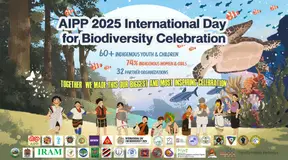
30 May 2025
IKPA Statements
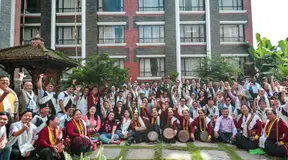
7 May 2024
Photo Stories
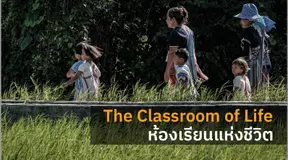
![The Classroom of Life [English]](/_ipx/f_webp&q_70&s_288x160/https://wp.aippnet.org/wp-content/uploads/2022/08/20200629-Picture-1_AIPP_Lakpa-cover-Final.jpg)
![The Classroom of Life [Thai]](/_ipx/f_webp&q_70&s_288x160/https://wp.aippnet.org/wp-content/uploads/2022/08/Picture-1_AIPP_Lakpa-Thai-Resized.jpg)
Contact Us
Asia Indigenous Peoples Pact (AIPP)
112 Moo 1, Tambon Sanpranate, Amphur Sansai, Chiang Mai 50210, Thailand
Phone: +66(0) 53 343 539
Fax: +66 (0) 53 343 540
[email protected]