Walking Classrooms in Huay Ee Khang Village: Bridging generations through Indigenous Knowledge
25 May 2025
25 May 2025 | Chiang Mai, Northern Thailand
By Lakpa Nuri Sherpa, AIPP
For two enriching days, from 10-11 May, over 40 Indigenous Karen children and youth gathered in Huay Ee Khang village, Northen Thailand for an intergenerational learning exchange. Guided by Karen (Pgakenyaw Indigenous Peoples) Indigenous Women and youth leaders, the event became a living bridge between elders and the younger generation, ensuring the continuity of Indigenous Knowledge, cultural practices, and ecological wisdom.

“If we don’t create spaces for children, youth, and the new generation, our traditions will eventually fade away,” shared Ms. Noraeri, a highly respected Karen Indigenous woman leader. “We must support each other, campaign together, and create these spaces so our future generations will grow strong, rooted in our Karen identity.”
Day 1 – Learning from the Forest, River, and Mountain

The morning began in a sacred circle near the community hall, where icebreakers games led by Ms. Noraeri set a tone of connection and excitement. Participants then split into four groups, each exploring a different aspect of Karen knowledge:
- Natural Dyeing
- Rotational Farming
- Medicinal Herbs
- Forest Foods and Aquatic Life
Led by a mix of elders and youth, the groups embarked on a “walking classroom”—journeying through forests, river, and mountain while learning about plants, trees, herbs, seeds, aquatic life, and wild foods, along with their nutritional, economic, and cultural significance.
In the natural dyeing group, Ms. Noraeri guided the children to the mountain summit, teaching them about the tree barks used to create natural dyes for traditional weaving. The children not only observed and listened, but they also harvested and tasted wild foods.
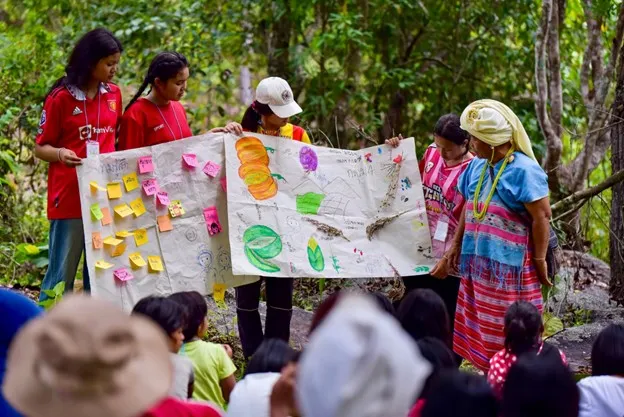
The learning trails converged in the heart of the Indigenous Women’s Forest, a space cultivated and protected by the women of Huay Ee Khang. (Learn more here: https://aippnet.org/huay-ee-khang-model-emerging-idea…/). There, each group shared reflections and discussed the knowledge they had gathered. After lunch, they presented their findings to the larger group, showcasing what they learned about sustainable practices, biodiversity, and Karen traditions.
Back in the village, participants took part in a creative activity where they applied what they learned—using natural dyes prepared from tree barks to create beautiful patterns on white cloth.


Day 2 – Sharing Through Food & Reflections
The second day centered on Karen culinary traditions. With the guidance from Indigenous Women leaders, children prepared traditional dishes using seasonal ingredients—a delicious embodiment of intergenerational knowledge and care.


As the event closed, many children expressed pride and empowerment, eager to carry forward what they had learned.
Words to Remember
“We live on this Earth, carrying wisdom unique to Indigenous Peoples,” said Ms. Noraeri. “It’s our duty to ensure our youth are grounded in these traditions—our ways of managing resources, harvesting foods, and preserving seeds. These are not just practices; they are the heart of our survival.”

Let’s draw inspiration from Huay Ee Khang’s women. Together, we can continue nurturing Indigenous Children and Youth—so they walk forward with the strength, pride and wisdom of our ancestors.
Photo Credit: Lakpa Nuri Sherpa, AIPP
Contact Us
Asia Indigenous Peoples Pact (AIPP)
112 Moo 1, Tambon Sanpranate, Amphur Sansai, Chiang Mai 50210, Thailand
Phone: +66(0) 53 343 539
Fax: +66 (0) 53 343 540
[email protected]