Tohmle Statement
21 October 2024
Tohmle[i] Statement
This statement was developed at the 4th Indigenous Knowledge and Peoples of Asia (IKPA)
Conference on Indigenous Peoples’ Rights, Biodiversity, and Climate Change,
held on October 1-4, 2024, in Pokhara, Nepal
Introduction
Asia is a region of high biological and cultural diversity, where we, Indigenous Peoples, play a vital role in conserving and managing our land, territories, waters and resources. We have been doing this since time immemorial and as such, are permanent partners and leaders in the implementation of the Convention on Biological Diversity (CBD) and the United Nations Framework Convention on Climate Change (UNFCCC).
We have actively engaged in the Facilitative Working Group (FWG) meetings of the knowledge platform at the UNFCCC, and the Ad hoc Working Group on Article 8j and Related Provisions of the CBD. Indigenous Peoples from Asia and other regions of the World are also actively engaged in the advocacy that has contributed to the inclusion of human rights, the rights and knowledge of Indigenous Peoples in the Paris Agreement on Climate Change, and the Kunming Montreal Global Biodiversity Framework (KM-GBF).
A year ago, Indigenous Peoples’ representatives in Asia issued the E-Sak Ka Ou Declaration– a statement of our collective call for collaborative solutions to address the urgent concerns and issues confronting us and the planet. The declaration is translated into 12 languages and is featured on 11 websites. Last year, we also drafted our Krabi Action Plan on Climate and Biodiversity, the region’s first ever collective action plan by Indigenous Peoples that integrates climate and biodiversity efforts. This plan affirmed our commitment to strengthen our actions and leadership for the conservation and sustainable use of biodiversity and mitigation and adaptation to climate change at local, national and regional levels.
Since then, Indigenous Peoples in Asia have achieved much on the ground in terms of:
- empowering our communities,
- mapping our territories,
- formulating conservation and restoration plans,
- facilitating inter-generational transmission and documentation of Indigenous Knowledge,
- broadening our networks and coalitions,
- engaging in processes of legislation and review of National Biodiversity Strategy and Action Plans (NBSAPs),
- producing policy advocacy materials, and
- further elaborating our commitments and contributions as Indigenous Peoples towards a better future of living in harmony and in peace with nature.
For us, upholding the human rights of Indigenous Peoples is non-negotiable in all climate change and biodiversity conservation action plans and strategies. However, we continue to face multiple challenges and threats from biodiversity loss, climate change, deforestation, land degradation, commercialization, land use change, land grabbing, water grabbing, criminalization, militarization, and human rights violations in the name conservation, energy transition projects, and carbon markets, among others.
We reiterate the urgent need to respect our collective rights to our land, territories and waters, ensure the genuine implementation of Free, Prior, and Informed Consent (FPIC), and recognize and strengthen Indigenous governance systems in all biodiversity and climate actions and solutions led by governments, financial institutions, UN agencies, developmental organizations and other stakeholders. It is likewise necessary to scrutinize national conservation targets and programs and safeguard the security of Indigenous Peoples Human Rights Defenders.
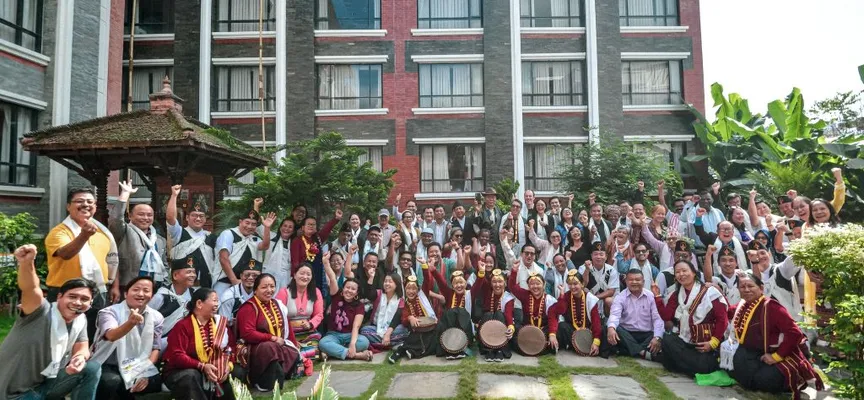
Today in Pokhara, Nepal, 65 Indigenous Peoples leaders from 10 Asian countries are gathered, representing 36 global, regional, national, and local organizations, including representatives of elders, women, youth, persons with disability, media, lawyers, development agencies and funders. Together, we reaffirm our commitment to do our part in addressing the pressing issues related to our land, territories and waters, Indigenous governance and knowledge systems. This commitment will be carried forward through the implementation of the Pokhara Action Plan – a collective strategy on biodiversity and climate change formulated by the participants of the 4th Indigenous Knowledge and Peoples of Asia (IKPA) Conference on Indigenous Peoples’ Rights, Biodiversity, and Climate Change, held in Pokhara, Nepal from 1-4 October 2024.
Collective Recommendations to Advance Indigenous Peoples’ Leadership, Human Rights, Biodiversity Protection, and Climate Justice
Guided by the wisdom of our ancestors and elders, and motivated by our collective commitment to promote our common values of community solidarity, caring, and sharing for future generations and the wider community, we underline our collective recommendations to CBD Parties, UNFCCC Parties, private sectors, financial institutions, conservation INGOs, NGOs, donors, and relevant institutions on the following important issues:
National Biodiversity Strategies and Action Plans (NBSAPs), Nationally Determined Contributions (NDCs), and National Adaptation Plans (NAPs)
- Ensure the full and effective participation of Indigenous Peoples, including Indigenous women, youth, and persons with disabilities in decision-making processes relating to the revision and updating of the NBSAPs, NDCs, and NAPs through the establishment of a dedicated space for Indigenous Peoples.
- Urgently establish effective participatory mechanisms at all stages of these processes at the national and sub-national levels or strengthen them where they already exist.
- NBSAPs, NDCs, and NAPs should be based on a human rights-based approach, including a strong push to secure our collective tenure rights and to ensure FPIC for all biodiversity and climate actions on our lands, territories, and waters.
- Incorporate the actions undertaken by Asian Indigenous Peoples through our collective action plan on biodiversity and climate change, while submitting country reports to the biodiversity and climate change conventions.
Human Rights-based Approach to Conservation
- Reform detrimental conservation laws and policies by recognizing and protecting our Indigenous conservation practices, customary laws and institutions. Ensure these reforms are effectively implemented through robust enforcement mechanisms, accountability measures, and partnerships with Indigenous Peoples.
- Recognize and promote Indigenous and Traditional Territories (ITT) as a third pathway, distinct from protected areas and other effective area-based conservation measures (OECMs), in achieving Target 3 of the KM-GBF.
- Guarantee the meaningful and effective participation of Indigenous Peoples as rights-holders and leaders in conservation efforts. Ensure the implementation of FPIC in all conservation and climate actions.
- Address the historical injustices committed in the name of conservation by returning lands and waters taken without our FPIC. Support the restoration, protection, and maintenance of the health of these lands, territories, and waters, and recognize Indigenous Peoples’ collective ownership over them.
New Programme of Work on Article 8 (j) and its Institutional Arrangement
- Establish a permanent subsidiary body at COP16 as the appropriate mechanism to further enhance the implementation of Article 8j and related provisions, as well as to take forward the progress from the Ad Hoc Working Group on Article 8j and the KM-GBF.
- Adopt the New Programme of Work on Article 8(j) and ensure that Indigenous Peoples can fully and effectively participate in its implementation, as well as that of the entire KM-GBF.
KM-GBF Monitoring Framework and Indicators
- Adopt the traditional knowledge indicator on land use change and land tenure in Indigenous and Traditional Territories (ITT) as a headline indicator
- Recognise the cross-cutting nature of the four traditional knowledge indicators to the KM-GBF, through their effective integration in the monitoring framework.
- Recognise and support (including financial support) the role of community-based monitoring and information systems of Indigenous Peoples (e.g. the Indigenous Navigator project, community mapping, community biodiversity surveys, inventories and other tools) in monitoring the implementation of the KM-GBF, including their contribution to national reporting.
Indigenous Peoples Human Rights Defenders (IPHRDs)
- Undertake legal and policy reforms to end the ongoing criminalization of Indigenous Peoples and strengthen measures to hold perpetrators accountable.
- End attacks, enforced disappearances, freezing of assets and bank accounts, assassination, violence, and repression of IPHRDs. Ensure effective and timely access to justice for victims of such violations.
- Adopt a zero-tolerance policy toward all forms of attacks against IPHRDs and Indigenous Women Human Rights Defenders, including threats, violence, sexual harassment, surveillance, and physical or legal attacks, including Strategic Lawsuits Against Public Participation (SLAPPs).
Loss and Damage
- Ensure that governing institutions of the funds responding to Loss and Damage recognize Indigenous Peoples as a distinct constituency by adopting an Indigenous Peoples policy and allocating a dedicated seat for Indigenous Peoples as active observer.
- Non-economic loss and damage experienced by Indigenous Peoples must also be included and defined by us.
Carbon Market and Just Transition
- Stop the design, implementation, and funding of carbon credit and so called “green” or “clean” energy projects on our lands, territories and waters without obtaining our FPIC in accordance with the UN Declaration on the Rights of Indigenous Peoples (UNDRIP).
- Conduct participatory cultural, environmental, and human rights impact assessments with our meaningful participation so that we can make informed decisions collectively about carbon credit and renewable energy projects and can negotiate for fair and equitable benefit-sharing arrangements.
- Recognize and support community-driven and owned mechanisms, standards and initiatives that differ from market models based on extraction and commodification of nature.
- Ensure the inclusion of Indigenous Peoples’ principles and protocols on just transition in the Nationally Determined Contributions (NDCs) to move away from the business-as-usual practices of mining and extraction of “transition” and related minerals, that displace Indigenous Peoples, pollute our environment, damage sacred sites and destroy biodiversity.
Resource Mobilization
- Provide direct, grants-based, flexible, accessible, ambitious, equitable, and reliable public finance directly to Indigenous Peoples. A human rights-based approach must guide investment, mobilization, and institutionalization of any finance into our lands, territories and resources, fully complying with UNDRIP, assuring our ownership, leadership, self-determination, and self-governance.
- Increase the availability, accessibility and impact of climate change and biodiversity finance and mechanisms, and establish transparent, equitable, and dedicated facilities and work programs with our full and effective participation to support our self-determined needs and priorities.
- Provide financial, technological, and technical support to build the capacities and skills of the Indigenous Peoples, Indigenous women, Indigenous Youth, Indigenous Persons with disabilities, Indigenous journalists, and Indigenous Lawyers to fully and effectively participate in accessing and managing funds and to sustain active engagement in relevant decision-making bodies and mechanisms.
- States must not only provide reparations and restore our territories but also offer adequate support to restore our health and well-being, which have been harmed by the loss and degradation of our lands
We, the participants of the 4th Indigenous Knowledge and Peoples of Asia (IKPA) Regional Conference, reaffirm our commitment to implement the Pokhara Action Plan on biodiversity, climate change and Indigenous Peoples’ Rights. We will continue to conduct an annual stocktake of regional trends in human rights, biodiversity, and climate change, while contributing to the advancement of Indigenous Peoples’ rights across Asia.
Click here to download the full Tohmle Statement [ English ]
Click here to download the full Tohmle Statement [ Bahasa – Malaysia ]
Click here to download the full Tohmle Statement [ Ilocano ]
Click here to download the full Tohmle Statement [ Thai ]
Click here to download the full Tohmle Statement [ Spanish ]
Click here to download the full Tohmle Statement [ Swahili ]
Click here to download the full Tohmle Statement [ Khmer ]
Click here to download the full Tohmle Statement [ Nepali ]
—————————————–
[i] “Tohmle” is the Indigenous name for Dhampus, a village situated in the Gandaki province of Nepal. This name holds cultural significance for the Gurung Indigenous Peoples.
Contact Us
Asia Indigenous Peoples Pact (AIPP)
112 Moo 1, Tambon Sanpranate, Amphur Sansai, Chiang Mai 50210, Thailand
Phone: +66(0) 53 343 539
Fax: +66 (0) 53 343 540
[email protected]