Gam A. Shimray: The involvement of the youth in the Asian Indigenous movement gives us hope
24 November 2025
By Ian Bravo
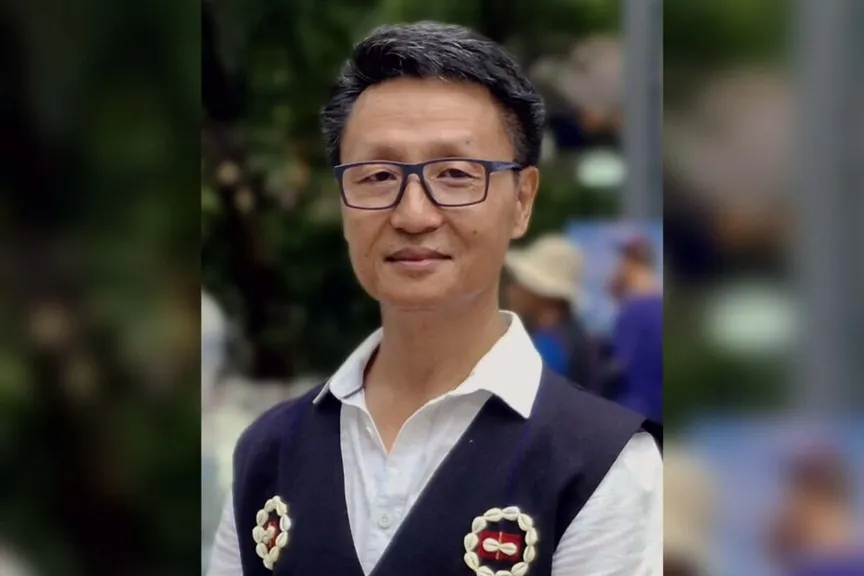
Servindi, november 24, 2025.- The Naga Indigenous leader, Gam A. Shimray (56), is about to complete his second term as Secretary General of the Asia Indigenous Peoples Pact (AIPP), the largest Indigenous Peoples’ organization in Asia.
Originally from the Naga hills of Manipur, an Indian state where the Naga people are a minority and face multiple oppressions, the Asian leader’s life has been deeply influenced by his people’s struggles from an early age.
As he explains in an article for Indigenous Debates, the Indigenous Peoples of Asia have been building paths to consolidate their self-determination in a context marked by authoritarian regimes, official denial of their identities, territorial dispossession, and repression.
From Chiang Mai (Thailand), where he is currently based, Gam A. Shimray shares his perspective on the processes and struggles of the Asian Indigenous movement, the role of the youth, and the challenges he finds on the path to self-determination for Indigenous Peoples.
_________________________
Gam A. Shimray studied History in New Delhi. He completed a postgraduate degree in Political Science and has taken a postgraduate diploma in Development Studies. Since the 1990s, he has been working on Indigenous Peoples’ causes. In 1998, he became president of the Naga Peoples Movement for Human Rights (NPMHR). Then he worked for a long period at the AIPP and, in 2016, was elected Secretary General of this regional organization.
_________________________
—How have the struggles of the Naga People influenced your personal experience?
My involvement [with the Indigenous movement] started at a pretty young age during conflicts between ethnic communities and other Indigenous groups in 1992.
We were totally militarized in our area by the Indian forces. There are no clear statistics but what some studies say is that for every 5 Naga civilians, there was one Indian army. They heavily militarized the whole region.
My family was on the safer side. My father was in politics and he was a Minister. He had security as a prominent figure, so we didn’t face the same level of harassment as other Naga citizens.
But even in my case, I can still remember a lot of situations where we were completely paralyzed with tensions because everyday in our neighborhood, we had firing between armed groups and the Indian army.
It was necessary for my father to visit the areas of conflict so he would always take me with him. The army just checked the vehicles with guns pointing at me. I was a young boy and they didn’t immediately identify me. It was really terrifying, but I just followed my father. I think the reason he took me along was because he thought the military would think twice before reacting randomly if I am there.
At a very young age I was sent to a boarding school because of the situation in our region. Those days bans, protests, curfews and total shutdown were very frequent and sometimes very random too. Often, curfew is declared while we are in school, so on our way home, the army would stop and question us, we were terrified of all those things.
I myself was not aware how much I was affected by all these experiences. But I could never see any person with military uniform or somebody with guns. It took me many years to overcome this fear and look at an armed person in uniform in a normal way. I think I overcame that fear only after I settled in Chiang Mai, in 2008, because of my work with the AIPP.
_________________________
The Asian Indigenous Peoples Pact (AIPP) is a regional organization founded in 1992 to promote and defend the rights of Indigenous Peoples. Currently, it includes 46 member organizations from 14 countries across Asia, including ethnic-based organizations, women, youth and Indigenous persons with disability organizations. In addition, it coordinates six networks and alliances of Indigenous Peoples in the continent.
_________________________
—The AIPP includes youth networks. How do you see the involvement of new generations in the Indigenous movement in Asia progressing?
The focus on the youth is a little bit delayed in Asia. But now we have the Asia Indigenous Youth Platform. It is like the youth wing of AIPP, having its own autonomous functions, but strongly interconnected to be able to address the issue of intergenerational knowledge, leadership and continuity of the movement.
Initially, we had started as programs focusing on youth leadership. But that was not enough because the youth were not fully exercising their agency, meaning that they did not have their own space, and not being fully included in the processes. It was not enough for the youth leadership to grow.
That is why we encourage the formation of the youth leadership platform. It has been quite encouraging for them to come together and begin to push them to think about how they visualized the future leadership.
The long-term program’s strategy is still not very clear yet, but we are laying down the pathways of the program’s strategy very slowly because they have to figure out themselves. Otherwise it would be like the elders telling them what to do, which I don’t believe in. They must internalize whatever decisions they take and therefore they must take responsibility for the decisions they make.
It is a slow process, but I think that definitely some of the youth leadership are already quite involved in these processes and that gives hope”
So, we encourage a kind of a dialogue process in AIPP. We continue to include the role of the youth in different programmes and some of the youth are focused and doing very well.
For example, the AIPP School of Participation was designed to draw them into a deeper reflection about their future and also about understanding the past. So that there is collective memory that they also embody and therefore linking themselves to the collective memory.
So this program is a kind of a catalyst that is provided to look deeper into this collective memory and the future that they want to envision through the exercise of their own agency.
We have another program called the Centers of Excellence in Village Governance. The youths in these communities have become very active in governance issues and participation in community life. These are models for them to be able to see it in a concrete sense, not just theoretical knowledge. It gives them a better visualization of what we are talking about, what these indigenous world views are and so on.
I do believe that some of the youth will begin to play the leadership role in some of these initiatives. From this year, we have already included youth leaders to take the lead along with the elders.
Another thing planned for next year is something that we called Indigenous Youth Guardianship Summit. They are showing great interest and they want to do it now. It is a slow process, but I think that definitely some of the youth leadership are already quite involved in these processes and that gives hope.

Gam A. Shimray was part of a delegation from three continents that visited Bolivia and learned about the autonomous experience of the Multiethnic Indigenous Territory (TIM). In the photo, he is sharing with colleagues at the Monte Grande del Apere monitoring station. Picture: Ian Bravo/Servindi
—The Naga people are fighting for reunification, but some news reports show that this desire is fading among younger generations.
Reunification of Naga territory is part of the aspiration of our struggle for self determination. These two things are inseparable, they cannot be divided. The issue that the younger generation has lost the aspiration for the Naga self-determination is partially true. It depends on which part and what narrative we are looking at.
In India, we are divided into four states. That story would come out mostly from the state of Nagaland. And It’s not unusual for people to hear the narrative from the youth in Nagaland because less is known about the Nagas in other parts of the Naga territory. I am aware of this narrative, but if you look at the youth from the other states, the narrative would be different and the number of people with this view would be much lower.
If you go historically, we started with the struggle for a separate independent state. Nagas declared its independence unilaterally one day before India became independent. Later, India and Myanmar divided the boundary cutting across the Naga territory. So, our territory came to be divided into two countries.
Nagaland is a state under the Indian state. It was created to divide and rule the Naga people. That is the only state where we the Naga people are in control in general. We are minorities in the other three states in India, so discrimination is much higher there. And when you are in a situation where you face a lot of suppression your narrative is always different.
In the Nagaland State, the government of India has been pouring in a lot of money, whether for education or development projects and many other entrepreneurships. So they have access to this kind of thing much more than the Nagas in other states.
Another factor is that the peace negotiation has been going on since 1997, it has been going on for too long. Before the ceasefire, the Naga participation in the Indian democratic election was interpreted by the government as acceptance of the Indian state. The running of a democratic state was used by the Indian state to misrepresent that the Naga aspiration “is just from a rebel group”. So when the peace process started, the Indian government still would use this narrative.
In 1998, just a year after the ceasefire and the peace talks were going on, Naga decided to prove the government of India wrong. So we came up with the famous slogan called «No solution, no election». We didn’t participate in elections to demonstrate our full commitment for the peace process and the Nagas’s aspiration for self-determination.
In all the four states we operate as a community and if we decide to participate in voting, everybody does. The Naga people surely have one of the highest percentages of voting in India. That year, more than 90% of the people didn’t vote. And this includes the state of Nagaland.
Why I’m saying this is because the peace process has been stuck for such a long time and it has done a lot of harm to the Naga people. The Naga political groups have not been imaginative enough about what Naga self determination is about or what it means. It’s not just about the demand for our rights, our demand is inseparable from our vision for self governance. Just bluntly speaking, these are some of the things our leaders failed to engage in.
A major task before us is to help our communities overcome the effects of fragmentation, victimhood, and internalised oppression, because these are the barriers preventing us from reclaiming the deeper meanings that once guided our societies”
Those things are really crucial because, when the ceasefire came, the Indian military began to withdraw from the space of the civil society, which opened up spaces for the Naga people to participate and imaginatively occupy them. But when the opportunity came, we realized that we were so limited on how we were organized as a people. We didn’t realize how broken our institutions and people were. We were very strong in resisting such as protesting and boycotting the state, but we didn’t have the vision of how we are going to exist as a people.
Now, over time, the government of India has continued to play this delaying tactic to divide the Naga people. They keep talking about development projects and poverty as an agenda to distract the people. A lot of investment has happened and over time, they were able to begin to influence or control some Naga leaders. So deep corruption has set in and a lot of confusion and new kinds of problems have emerged.
Therefore, a lot of people have lost confidence with these Naga leaders who are negotiating with the government of India. That loss of confidence is leading to a sort of disillusion, especially in Nagaland state.
_________________________
India is one of the countries with the largest Indigenous population (also called Tribals and Adivasis) in the world, with an estimated population of 104 million (comprise 8.6% of the country’s total population). While the State identifies 705 ethnic groups as Scheduled Tribes, the lack of official recognition would reveal a larger number of Indigenous People in the country, according to the International Work Group for Indigenous Affairs (IWGIA).
_________________
—During the Indigenous Cartography Seminar in Bolivia, you spoke about the need of meaning-making as part of the processes of self-determination of peoples and the difficulty of doing so. Why is it difficult to recover these meanings?
Recovering our meanings is difficult because centuries of disruption have deeply affected Indigenous Peoples. This began with early conquests by neighbouring kingdoms, continued through modern colonialism, and persists today in the form of internal colonisation within the nation-states that now occupy our homelands. Over time, our self-determination, systems of self-governance, and collective memory were eroded and in some places nearly destroyed. We now find ourselves in a fragmented situation.
In such conditions, communities often become reactive rather than proactive. Many of us carry internalised oppression or a victimhood mentality, which weakens our agency. Instead of acting from a position of strength, purpose, and self-belief, we respond as if we are merely surviving-accepting whatever comes from state authorities or other external forces.
Modern forms of disruption add further challenges. Mass media, modern education, market forces, and the pace of globalization create distractions not only for young people but increasingly for elders as well. These pressures shape the way we respond to our already volatile circumstances. For this reason, a major task before us is to help our communities overcome the effects of fragmentation, victimhood, and internalised oppression, because these are the barriers preventing us from reclaiming the deeper meanings that once guided our societies.
Traditionally, in a spontaneous and authentic community environment, our relationships were grounded in reciprocity. Participation, sharing, helping, and contributing were natural ways of being. This reciprocity was the foundation of community fellowship and reflected our relational value systems. Open interaction was second nature and allowed us to grow closer—mentally, emotionally, and spiritually. Through everyday participation, we cultivated a deep culture of participation.
This deep culture of participation involved a holistic process of intellectual, emotional, and spiritual integration within the community. It created a shared synthesis—an ongoing transformation of one another through conversations, dialogues, and collective action. To me, this process of synthesis is meaning-making; it is how we make sense of the world together, how we derive shared purpose, and how we reinforce values that guide the common good.
Many of our communities once nurtured this deep culture of participation, where meaning-making was vibrant and continually renewed. It strengthened trust, relationships, and our collective ability to act together. Therefore, recovering meaning also means rebuilding this relational foundation—reviving the practices and environments that allow meaning-making to flourish again.

“It is up to us to reconnect with the creation of meaning. […] That connection is what makes a community successful”, Shimray said in Bolivia. Picture: IWGIA
I must admit that I don’t know much about Latin America. But I want to know more.
I was invited a few times to Peru, especially by the Wampis and Awajun Nations. Unfortunately I couldn’t go, but they came to our area in 2023. At that time, they said that culturally they are very close to us, even in terms of ancestry, worldview, and many other things that they share a lot with us.
The recent visit to Bolivia was definitely quite interesting for me. There was a lot of discussion about the Plurinational State and I got some ideas. In the Territorio Indígena Multiétnico (TIM), I got interested in how the five nations came together.
When we came to La Paz, we had discussions on the issue of Free Prior and Informed Consent (FPIC) in the vice president’s office. The main question I was trying to raise to them was: What kind of institutional arrangement Indigenous territorial autonomy has with the national government? How do they frame and apply FPIC institutionally in the context of a plurinational state?
The perspective I was trying to share with them was that it should be a Government-to-Government relation. So that the conduct of the FPIC process is left to the Indigenous governments. FPIC as an internal affairs of Indigenous governments would allow them to follow their cultural processes of genuine participation and generating consent through a deliberative engagement within the community. But this seems to be missing; they were not discussing FPiC as a Government-to-Government relation.
FPIC as an internal affairs of Indigenous governments would allow them to follow their cultural processes of genuine participation and generating consent through a deliberative engagement within the community”
In the same way, we need to develop a concept of education in the modern context and to think about how we begin to institutionalize it in our own autonomous project. How do we educate and bring about mechanisms and institutions that ensure the type of meaning-making community process and understanding its importance.
In the Indigenous People there was no law making body, it was only a pronouncement in most of the communities, what collectively everybody agrees. It’s a law that organizes the community and the community identifies with it. It was a collective process.
That should be the institutional relationship of the self governing entities of Indigenous Peoples with the national state. The national government may support it with resources and other things, but it should be left as an internal business of the self-governing territories. In addition, we can think about what kind of institutions would be necessary to deal with violations of agreements between the Indigenous self-governing territories and the national government. This would be necessary because you should not solely rely on the national justice system for such disputes or cases of violations. These kinds of questions came to my mind when I was there in Bolivia.
—You also mentioned that the movement has given you many questions that you couldn’t answer. Can you tell me about some of them?
Questions have always been there. When I was younger, I would look up a lot to the socialist ideas because that was the form of guidance and knowledge they were giving you in the University campuses; some kind of very organized structure on how to resist the state and so on.
I had many friends coming from the socialist camps, but they didn’t accept Indigenous Peoples’ movements.. They were deeply intransigent and I couldn’t understand why? Later, of course, I began to understand that they would like to label Indigenous movements as kind of a class struggle.
Then, in 2005 or 2006, I took up Development Studies in Dublin. I studied a lot of post modernist theories. What they were trying to say seemed very good in their critiques. As I went back with the movement, I didn’t find many answers to what they were actually trying to say. It was a more deep critic, but where is that critic leading to? Many of the deeper questions about the Indigenous movements haven’t been answered.
It’s just not too long ago, maybe about ten or fifteen years ago, that I began to see clearly what Indigenous movement is about and our system means; how it is different, how there can be an alternative perspective and so on. As a Naga indigenous person, I think it’s clearer to me in terms of our future direction and vision.
We operate at a village level and many writers in the past described the Naga political system as the Naga Village Republic. So, the logical question is, can we also exist as a Naga Nation? How can our small village system transcend or transform into a much bigger political entity as one people? That is our aspiration. How can we concretely build those things? How do we define our law, our stewardship, our authority and build our self-governance institutions?
As you experiment with an idea, you learn and you work it out. That is how I think a clear pathway will emerge. But there are several unanswered questions (to me), and I’m interested in finding answers to them.
Nagas are not just one tribe. We are many tribes. I’m from the Tangkhul tribe. If I go to another tribe’s area and I get involved in a problem there, I’m not sure how justice would be done for me. We don’t have an overarching justice system. It would depend a lot on good gestures, good faith, trust, and so on. So we need to build that common frame.
That’s why I was asking in the TIM what was the basis and how those five nations came together? How are they building their self-governance institution? These are questions that I am extremely interested in, and looking forward to working on such questions and vision after my AIPP term finishes in December.
_________________________
Two out of three Indigenous People in the world live in Asia. While some estimates suggest a figure of approximately 260 million people, the actual number could be higher, as not all countries in the region recognize Indigenous identities in their national censuses, as is the case in some Southeast Asian countries. In the continent, Nepal is the only country that has ratified Convention 169 of the International Labor Organization (ILO).
_________________________
—How would you describe your time as general secretary of AIPP? Maybe your past few months…
For the past few months I feel relieved. At the end of my term, it has been a big challenge to bring together these processes that we experimented with for about nine years into a broad framework of self-governance based on Indigenous worldview and core values.
One of the major challenges for me, as the Secretary General, was that some groups may be strongly influenced by some ideology. However, accepting the fact that we may not necessarily agree on everything, or agreeing to disagree helps us to move forward in humility and strengthen our solidarity towards a common cause. Humility became a principle in the organising of AIPP.
We have a lot to learn from the smaller Indigenous groups in terms of recovering our worldviews and value systems to apply them in our movement and vision”
The name of AIPP is inspired by the idea of a continuous process of making agreements in strengthening common positions and vision. It is reflected in the name itself, the word ‘Pact’ or ‘agreement’, is a pathway where we can work and live together. The founders were very wise in doing that. It is about accepting that Indigenous People have differences in our own local areas also. We may have differences and a conflicting situation, but at least realising that we need to transcend our differences leads us to finding the pathways to resolving conflicts. It is not necessary that we have the answer to everything immediately. It is important to realise that this is not humanly possible.
It is a lesson learned for me that many of the smaller Indigenous groups from the 14 countries are still at their formative stage and less organized, but they are very organic and still follow their Indigenous way of life and value systems. They are less organised as a movement, but we have a lot to learn from them in terms of recovering our worldviews and value systems to apply them in our movement and vision. Sometimes, there are tendencies to ignore them because they are less organised but it is necessary that they are given equal space to inspire us. So one of the big challenges to leadership is how we maintain a balance between the less organised and the robustly organised groups.
Bringing them together on the same footing with the understanding that both have equal value and contribution to make has always been the biggest challenge. And I feel that the founders laid down the foundation of these kinds of issues very well. As explained earlier, looking at ourselves inward with humility has enabled AIPP members to talk to each other despite our differences (since its establishment). The dialogues and conversations have been very healthy, strengthening AIPP as a regional movement and shaping our future together.
In building a common vision and future, we have been working to consolidate the worldviews and value systems that Indigenous Peoples share across Asia. Our aim is to shape these into a concrete common framework that expresses our core aspiration: the right to self-determination and self-governance.
More broadly, this requires defining a clear pathway—a continuing process through which we participate, contribute, and grow together in realising these aspirations. We have reflected this thinking in the new strategy of AIPP.
Creating and charting this pathway has been one of our biggest challenges. It demanded hard work to establish a coherent framework and direction, but succeeding in this effort has been deeply satisfying.
At this stage, I place my faith and trust in the emerging leadership that will carry this pathway forward.
Source: SERVINDI
Contact Us
Asia Indigenous Peoples Pact (AIPP)
112 Moo 1, Tambon Sanpranate, Amphur Sansai, Chiang Mai 50210, Thailand
Phone: +66(0) 53 343 539
Fax: +66 (0) 53 343 540
[email protected]