Indigenous Peoples call for recognition in the ASEAN – EU CSOs Forum in Conjunction with the 6th ASEAN-EU Policy Dialogue on Human Rights
16 October 2025
Civil Society Recommendations for an Inclusive and Accountable ASEAN and EU
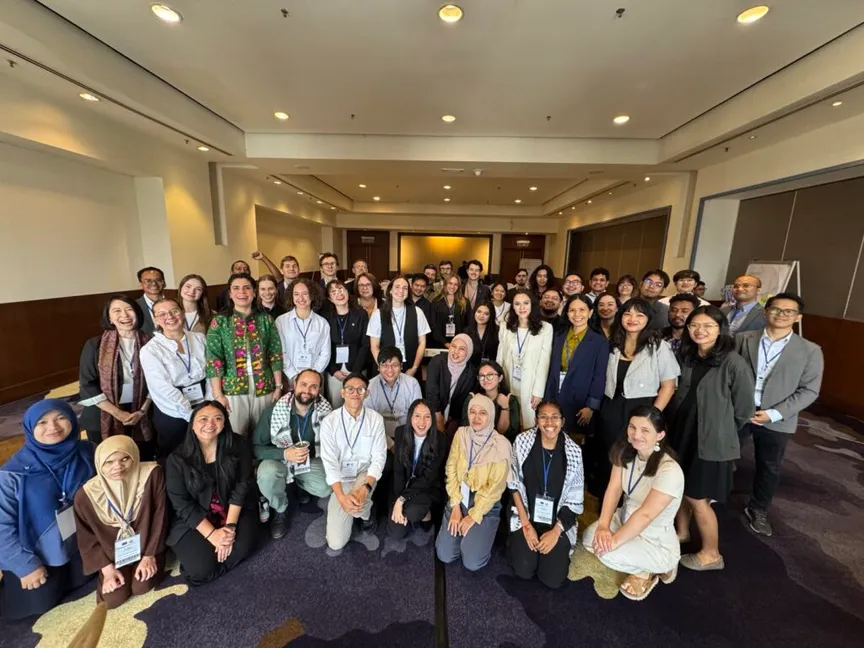
On behalf of the 52 civil society organisations (CSOs) that actively participated in the 4th ASEAN-EU CSOs Forum convened in Kuala Lumpur, Malaysia, on 13-14 October 2025, in conjunction with the 6th ASEAN-EU Policy Dialogue on Human Rights, we extend our sincere appreciation to the EU and ASEAN delegations for providing a platform for constructive dialogues with civil society representatives.
The ASEAN–EU Civil Society Organisations Forum is a vital platform for dialogue and cooperation, between CSOs from Southeast Asia and Europe, working together to advance human rights, democracy, and sustainable development. The civil society actors that have come together play an indispensable role in safeguarding civic space and the realisation of political, economic and social rights.
This fourth Forum comes at a critical moment. Across our regions, civic space is shrinking, environmental problems keep worsening, human rights and democracy are in crisis and human rights defenders (particularly women and environmental defenders) face greater risks.
Restrictive laws, impunity for human rights violations, mis/disinformation, digital surveillance, and barriers to funding limit meaningful participation and weaken democratic institutions. The situation is exacerbated by the rise of the far-right movements in both regions, which creates more difficulties, such as risks of criminalization and transnational repressions for people, including the youth, to conduct their activism.
At the same time, new opportunities are opening up. The ASEAN Vision 2045, the EU’s Corporate Sustainability Due Diligence Directive, the forthcoming ASEAN Declaration on Environmental Rights, the UN General Assembly Resolution 2025 on Civil Society Space, the EU’s upcoming Multiannual Financial Framework 2028-2034 as well as broader trade and investment between EU, ASEAN and their member states provide pathways to embed human rights and sustainability into regional cooperation. The ICJ’s Advisory Opinion Obligations of States in Respect to Climate Change also reaffirms States’ obligations to protect the rights of present and future generations.
With our key recommendations we emphasised the need to institutionalise the ASEAN-EU CSO Forum to ensure current thematic areas are directly addressed and progress monitored jointly with civil society.
Civil society stands at the frontline. Defending rights, protecting the environment, and amplifying the voices of the most vulnerable. To continue doing so, CSOs need recognition, protection, and access to decision-making spaces and resources.
This year’s Forum focuses on three themes:
- Shrinking civic space, civil and political rights, and democracy
- Climate change, human rights, and environmental rights
- Access to justice and effective remedies.
These are shared struggles requiring shared solutions. Strengthening civic space, enjoyment of human rights, protecting human rights defenders, and institutionalising sustainable and long-term partnership between CSOs, ASEAN, and the EU, based on trust and recognition, are essential for resilient democracy in both regions.
Everyone’s rights must be respected, protected, and fulfilled, particularly the vulnerable groups[1]. We should also recognize that some groups face intersectional barriers to equality and inclusion. Stronger cooperation is needed at all levels between home, host, and all other relevant countries to ensure the protection of the rights of all migrant workers and members of their families.
Key Recommendations
To facilitate the active, regular, structured, and meaningful participation of CSOs in regional policy formulation, implementation, and monitoring related to human rights, concrete steps should be taken to:
- Shift from viewing CSOs merely as implementers toward recognising them as strategic partners and knowledge leaders to ensure an enabling environment for democracy and the rule of law.
- Formalise the ASEAN–EU CSOs Forum as a systematic and standing mechanism for substantive intergenerational dialogue, consultation, and monitoring of human rights and sustainability commitments.
- Make human rights measurable and actionable by embedding them into ASEAN–EU indicators, cooperation priorities, and funding frameworks.
- Position CSOs as sounding boards and co-creators of regional policies, particularly in joint ASEAN–EU initiatives on trade and trade negotiations, climate, migration, and digital transformation.
- Deepen collaboration between CSOs and regional mechanisms, including AICHR, ACWC, and EU human rights mechanisms, to ensure follow-up and accountability.
- Integrate recognition of intersectional vulnerability into ASEAN–EU cooperation by ensuring protection for all vulnerable groups.
- Expand resources and partnerships for CSOs advancing rights-based and innovative approaches to governance, as well as ensuring transparency and dialogue that allow for tracking and monitoring of the status of the CSOs’ recommendations.
- Reduce legal and bureaucratic barriers so that grassroots and community-based organisations can access resources equitably. This includes safeguarding funding availability, opportunities, and simplifying funding procedures.
Shrinking civic space, civil and political rights, and democracy
- Guarantee open, transparent, and inclusive access to information on national and regional decisions, agreements, and consultations to enable meaningful participation at all levels.
- Respect human rights and uphold freedoms of expression, association, peaceful assembly, and collective bargaining. Refrain from using laws and mechanisms and extrajudicial measures that restrict civil society’s and human rights defenders’ work both offline and online.
- Ensure the clear transposition of international human rights law at the national level when it comes to the rights of vulnerable groups, and promote the protection of groups/communities not covered under current legal frameworks.
- Foster cooperation in addressing racism, xenophobia and anti-immigrant narratives in both regions.
- Guarantee meaningful and inclusive youth participation and from persons with disabilities in decision-making spaces, not only as beneficiaries but as co-creators of policy and practice.
- Promote civic and human rights education to catalyse people’s action to defend and protect human rights and civic space.
- ASEAN should establish legal recognition and protection mechanisms for human rights defenders with early warning systems, and safe channels for reporting threats and reprisals against defenders, and the EU should strengthen the protection of HRDs. ASEAN and the EU should forge partnerships for a common understanding of the status and role of HRDs.
Climate change, human rights, and environmental rights
- Support youth-led and community-based initiatives on climate action, social justice, and digital democracy.
- ASEAN and the EU to have a common understanding and the same level of recognition of the vital role of environmental human rights defenders, including Indigenous Peoples and Indigenous knowledge.
- Recognise the need for priority rights-based actions on climate change, pollution, and biodiversity loss, which are already declared as a triple planetary crisis, and promote the urgency and coordination of a UN convention on oceans.
- Promote access to free, accessible, science-based and transparent environmental information, participation in decision-making, and access to justice, in line with the Aarhus Convention principles.
- Establish a robust policy on Just Energy Transition that includes recognition of and safeguards Human Rights and Environmental Defenders, including Indigenous Peoples and vulnerable groups, that centers shared prosperity, human rights, and social protections, and fair negotiations.
- Establish and implement mandatory Human Rights and Environmental Due Diligence legislation to ensure responsible business conduct, particularly where voluntary measures continue to leave significant gaps in human rights protections, such as modern slavery. Legislation and policies must include provisions on meaningful stakeholder engagement with affected workers, and Indigenous communities right to Free, Prior, and Informed Consent (FPIC).
Access to justice and effective remedies
- Establish accessible, responsive and transparent complaint mechanisms within ASEAN and EU processes to ensure affected communities can seek redress.
- Support judicial independence and capacity-building to uphold the rule of law and rights-based approaches in addressing environmental and human rights cases.
- Facilitate judicial cooperation and exchange between ASEAN and EU institutions, including through training, peer learning, and knowledge sharing.
- Ensure regional frameworks promote access to remedies for people and communities affected by cross-border harms or corporate misconduct, with attention to access to justice for women’s, LGBTQIA+, and Indigenous Peoples.
- Enhance collaboration between regional human rights mechanisms, NHRIs, EU Equality Bodies, ombudsman offices and any other/similar mechanisms to improve accountability, monitoring, and complaint handling.
- Encourage ASEAN member states to strengthen the independence and mandate of NHRIs and ensure their engagement in ASEAN–EU dialogues on human rights and sustainability.
- Fulfill EU and ASEAN Member State obligations[2] and improve access to justice measures for victims of corporate abuses, which must include civil liability for harm caused by human rights due diligence failures; the reversal of the burden of proof for victims; the availability of judicial collective redress mechanisms and reasonable statute of limitations for the bringing of victims’ claims.
- Declare an official moratorium on the death penalty as a first step towards the progressive and complete abolition of capital punishment, and ensure the implementation of the EU Guidelines on the Death Penalty.
Click here to download the full joint statement ASEAN-EU
[1] For the purpose of this document, vulnerable groups include women, persons with disabilities, LGBTQIA+, children, young people, people of colour, Indigenous Peoples, ethnic minority groups, refugees, stateless persons, migrant workers in both land- and sea-based sectors, as well as men as victims of trafficking.
[2] Under Pillar III of the UN Guiding Principles on Business & Human Rights.
Contact Us
Asia Indigenous Peoples Pact (AIPP)
112 Moo 1, Tambon Sanpranate, Amphur Sansai, Chiang Mai 50210, Thailand
Phone: +66(0) 53 343 539
Fax: +66 (0) 53 343 540
[email protected]