Asia Indigenous Peoples Pact (AIPP) at the Transition Workshop of the ASEAN Intergovernmental Commission of Human Rights (AICHR): Dialogue on the evolving role of AICHR and expectations for the future.
10 February 2025
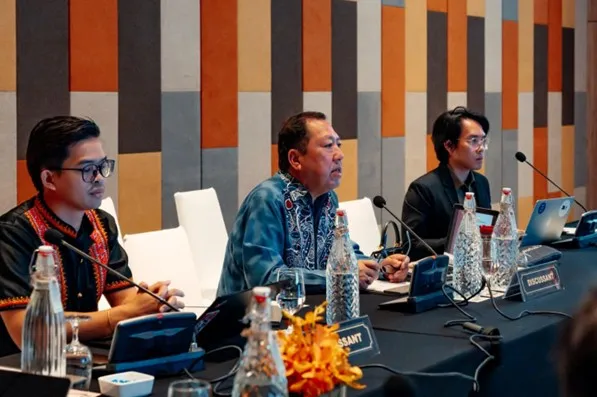
10 February 2025, Langkawi, Malaysia.
By Frederic Wilson.
Thank you, Your Excellencies!
Kopisangan!
It is my greetings of Indigenous dusun of Sabah, in the eastern part of Malaysia, the island of Borneo. Greetings to all and good afternoon!
I would like to begin by acknowledging and showing respect to our ancestors, the elders, present generations, and those of the future.
I take this opportunity to extend my heartfelt congratulations to Your Excellency, Mr. Edmund Bon, Malaysia’s Representative to AICHR, for chairing the AICHR meeting this year and reappointed for this important role. This appointment reflects both the trust placed in your leadership and the recognition of your esteemed contributions to human rights initiatives within the region.
Allow me also to acknowledge the valuable contributions of the former AICHR representative, whose dedication has shaped meaningful progress. At the same time, we warmly extend a sincere welcome to the newly appointed AICHR representative, wishing you every success in your vital role.
Your Excellencies, Commissioners, Ladies and Gentlemen,
Background
-
More than 200 million of the estimated 370 million Indigenous Peoples worldwide reside in Asia. The Asia-Pacific region is home to the largest number of Indigenous Peoples, with an estimated 260 million people, or 70 percent of the global Indigenous population.
-
Southeast Asia alone is home to an estimated 124 million Indigenous Peoples, representing a significant portion of the world’s Indigenous population. It is important to note that these figures are approximate and may not fully capture the total Indigenous population in the region.
-
However, precise population figures can vary due to differing Member States definitions and the recognition of Indigenous Peoples.
-
Indigenous communities play a crucial role in the region’s rich cultural and linguistic diversity, with many living in areas abundant in natural resources.
-
We, Indigenous Peoples, share a strong connection to our land and have embodied of Indigenous knowledge. Indigenous Peoples plays an outsized role in the conservation of biodiversity and our territories considerably overlap with intact and important areas for biodiversity conservation.
Commissioners, Your Excellencies,
Current human rights landscape, particularly Indigenous Peoples in Southeast Asia
-
The majority of Indigenous Peoples lack security over their lands and are not legally recognized as such, which contributes to their ongoing discrimination, marginalization, and exclusion.
-
Indigenous communities and Human Rights Defenders across Asia continue to face threats, criminalization, red tagging, attacks, and killings for their work protecting land, the environment, and the planet. Many of these persecutions are linked to complex global supply chains, including those in agribusiness, extractive industries and energy, development, conservation, and tourism. With the global push toward a just transition to sustainable energy sources, because the risks of human rights violations for many Indigenous Peoples have further increased.
-
Indigenous Peoples are not against development but we, often advocate for development that respects our rights, cultures, and connection to the land. We seek inclusive, sustainable, and culturally appropriate development models that benefit our communities without harming shared environments or violating our sovereignty.
Commissioners, Your Excellencies, Ladies and Gentlemen,
Evolving role of AICHR and expectations for the future
-
The AICHR Five-Year Workplan 2021-2025 sets a precedent for collaboration, shared commitment, and collective goals, as well as establishing/strengthening cross-pillar/sectoral collaboration on human rights and gender.
-
The evolving role of AICHR in ASEAN reflects the changing dynamics of human rights protection, shaped by ASEAN’s political and cultural context, which emphasizes non-interference, consensus-based decision-making, and respect for sovereignty. AICHR’s influence has grown over time, expanding from awareness-raising to mainstreaming human rights in ASEAN and evolving as a regional human rights mechanism in ASEAN.
Key areas for future focus:

Promotion and Protection of Human Rights: AICHR now engages more directly and needs to strengthen the engagement, particularly between sectoral bodies, NHRI, CSOs, and perhaps to extend with the private sector, for instance, Unilever company has established policies related to human right defenders in addressing human rights issues, and many of the subsidiaries company within ASEAN member states.
Regularized Activities: AICHR facilitates ASEAN human rights dialogues where each Member State reports its human rights concerns. AICHR representatives need to play active roles in asking questions to the AMS. The open and transparent methodology allows for critical discussions. Cross-sector collaboration is also key, as human rights are interconnected with development, trade, investment, environment, and security.
Advanced Human Rights Amid Economic and Social Integration: As ASEAN integrates economically and one of the fastest rates of economic growth globally, AICHR addresses human rights issues arising from this rapid development, such as business and human rights discourse and environmental protection. These efforts align with the development of the ASEAN Declaration on a safe, clean, healthy, and sustainable environment. It is important to note that Indigenous Peoples need recognition of their rights, including their lands, territories, and resources. Any project impacting Indigenous Peoples’ lands and livelihoods must require Free, Prior, and Informed Consent (FPIC). This process should involve proper, genuine, and continuous consultation without manipulation.
Enhancing Accountability and Monitoring: AICHR can provide more robust mechanisms for monitoring the implementation of human rights commitments and holding ASEAN member states accountable for any human rights violation. This includes providing regular reports and assessments on human rights progress by utilizing the complaints mechanisms from the AICHR itself and perhaps this will be a good avenue to strengthen the collaboration between national human rights institutions (NHRIs).
Greater engagement with Stakeholders: AICHR increased and need to strengthen the engagement with civil society organizations (CSOs), and key stakeholders in ASEAN to ensure diverse perspectives are considered in shaping human rights agenda. For instance, in the Priority Area 2.2, identify the human rights matters of interest to ASEAN and develop common approaches and positions on the identified matters – during the UPR session to have joint shadow report. This will also perhaps open the space for collaboration in the International Communication procedures and other UN Human Rights mechanisms like United Nations Permanent Forum on Indigenous Issues, Expert Mechanisms on the Rights of Indigenous Peoples (EMRIP) and UN Business and Human Rights (UNBHR).The needs to strengthen the multi stakeholders’ collaboration – where governments, CSOs and other actor can collaborate in addressing the human rights issues.
Priority area 2.6 as stated in the AICHR Workplan 2021-2025 – Highlight the importance of sharing best practices, in addressing of human rights issues related to women, youth, children, persons with disabilities, migrant workers, older persons, Indigenous Peoples, vulnerable groups, mitigating the impact of climate change and Business and Human Rights is a critical step in creating a more inclusive and rights-based society. This needs to be strengthen and continuous collaboration across sectors, ensuring Indigenous Peoples’ and other groups perspectives are integrated into the AICHR’s discussions and decisions – need for a more inclusive approach where Indigenous voices are heard, not just as participants but as active contributors to the creation of policies and frameworks.
AICHR Country Learning Visits: It is crucial new initiative enabling shared knowledge and experiences from other countries in ASEAN in addressing the human rights violation, including identifying good practices.
Commissioners, Your Excellencies
In conclusion, I would like to emphasize that we have long been stewards of the environment and unwavering defenders of our land, territories, and resources. As rights holders, knowledge custodians, and key partners in addressing pressing global challenges, we remain committed to the fight against human rights violations, climate change, biodiversity loss, and pollution. It is essential that the rights of Indigenous Peoples are recognized, including our rights to Land, Territory, and Resources (LTR), Indigenous knowledge, and the right to Free, Prior, and Informed Consent (FPIC) process. Equally important is the recognition of our right to self-determination. Moving forward, it is crucial that Indigenous Peoples and CSOs are given the safe and enabling space for effective, meaningful participation, ensuring our voices are heard and our contributions are valued in shaping the future. For the progress of ASEAN declaration of a safe, clean, healthy and sustainable environment, in the near future, we will contribute closely with AICHR in developing, implementing, and monitoring the Regional Implementation Plan and/or any related policy instruments at regional, national, or local levels. Quoting the themes of this workshop, “Building better and stronger, and staying relevant, inclusive, innovative and people-centred”, we can do this together in the spirit of “unity in diversity” with harmonies interest and value of the region, future for all.
May this workshop foster meaningful discussions and strengthen cooperation for the advancement of human rights across ASEAN.
Your Excellencies, I thank you!
Click here to download the full statement
Contact Us
Asia Indigenous Peoples Pact (AIPP)
112 Moo 1, Tambon Sanpranate, Amphur Sansai, Chiang Mai 50210, Thailand
Phone: +66(0) 53 343 539
Fax: +66 (0) 53 343 540
[email protected]