Indigenous Peoples Voices on Biodiversity: Ms. Twisa Tripura, Bangladesh
28 May 2024
A top-down approach to conservation benefits neither nature nor Indigenous Peoples
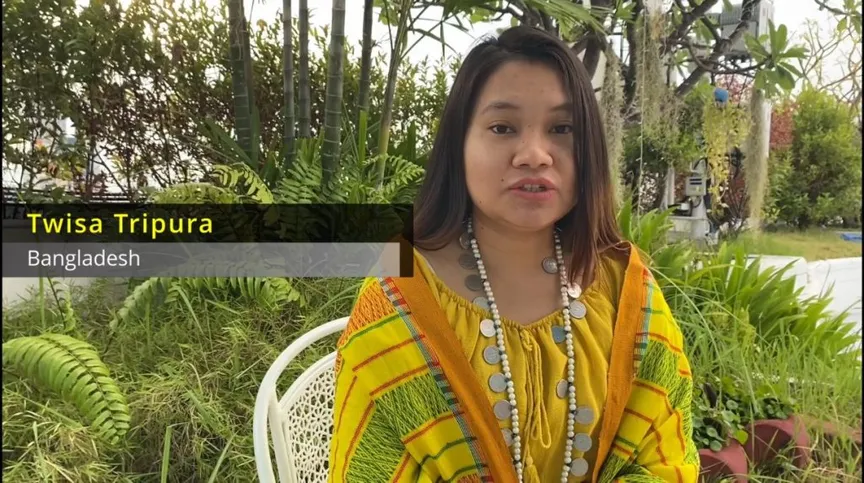
Meet Ms. Twisa Tripura, an inspiring Indigenous Youth and Woman from the Chittagong Hill Tracts (CHT), belonging to the Tripura Indigenous Communities. Twisa shares a powerful message about the deep connection Indigenous Peoples have with their lands and forests.
“Our culture, lives, and livelihoods heavily depend on the forest, and forests are also dependent on us,” says Twisa.
In the CHT, village common forests, rich in biodiversity, are collectively owned and managed. Indigenous Peoples here, like elsewhere, have systems of customary laws and institutions that emphasize collective ownership and decision-making. However, forest and biodiversity protection and conservation efforts are mostly top-down. There is no participation of Indigenous Peoples. These initiatives have also failed to preserve forests and biodiversity.
As we celebrate the International Day for Biodiversity, Twisa offers these vital recommendations to governments and policymakers:
- Respect the traditional knowledge and practices of Indigenous Peoples.
- Support the revitalization of traditional knowledge and practices of Indigenous Peoples.
- Recognize customary land tenure systems of Indigenous Peoples.
- Ensure meaningful participation of Indigenous Peoples in decision-making processes related to land and resource management.
- Partner with Indigenous Peoples to develop and implement biodiversity policies centered on their rights, knowledge, and practices.
Let’s honor the wisdom of Indigenous Peoples and work together to protect our planet’s biodiversity by protecting the rights of Indigenous Peoples.
Click here to watch on the Facebook.
Contact Us
Asia Indigenous Peoples Pact (AIPP)
112 Moo 1, Tambon Sanpranate, Amphur Sansai, Chiang Mai 50210, Thailand
Phone: +66(0) 53 343 539
Fax: +66 (0) 53 343 540
[email protected]